


In Dili, a country once rebuilding with international assistance now helps shape the conversation about recovery. Through the g7+, Timor-Leste has turned its experience of conflict and reconciliation into a platform for countries determined to have a stronger say in their futures.
Building Strength Through Shared Experience
Founded in Dili in 2010, the g7+ brings together 20 countries affected by conflict and fragility. Its members span Africa, Asia, the Pacific, the Middle East and the Caribbean. Timor-Leste hosts its secretariat, giving this Southeast Asian nation an enduring role in a partnership that reaches far beyond its shores.
The group’s central argument is straightforward: international support works better when it responds to priorities shaped within the countries receiving it. Governments and communities rebuilding after violence bring knowledge that outside advisers cannot simply replace.
At the group’s sixth ministerial meeting in April 2025, Timorese Foreign Minister Bendito dos Santos Freitas described its approach as promoting “country-led solutions, mutual learning and solidarity”. That formulation captures an ambition to participate in development as partners with expertise, rather than solely as recipients of assistance.
Putting Peace at the Centre of Development
A major milestone came in 2011 with the endorsement of the New Deal for Engagement in Fragile States in Busan, South Korea. Developed through dialogue involving conflict-affected countries and international partners, it made peacebuilding and stronger institutions central to development cooperation.
Its five priorities connect political legitimacy, security and justice with livelihoods, public revenue and services. The logic is practical: a school or market cannot fulfil its purpose if families fear violence, institutions lack trust or basic services repeatedly fail.
Timor-Leste’s own experience informs that thinking. Reflecting on the country’s recovery at the 2025 ministerial meeting, President José Ramos-Horta said: “Reconciliation was not merely a policy; it was a necessity for our survival as a nation.” His address also acknowledged the contribution of United Nations missions while emphasising national responsibility for sustaining peace.
Sharing Knowledge Across Oceans
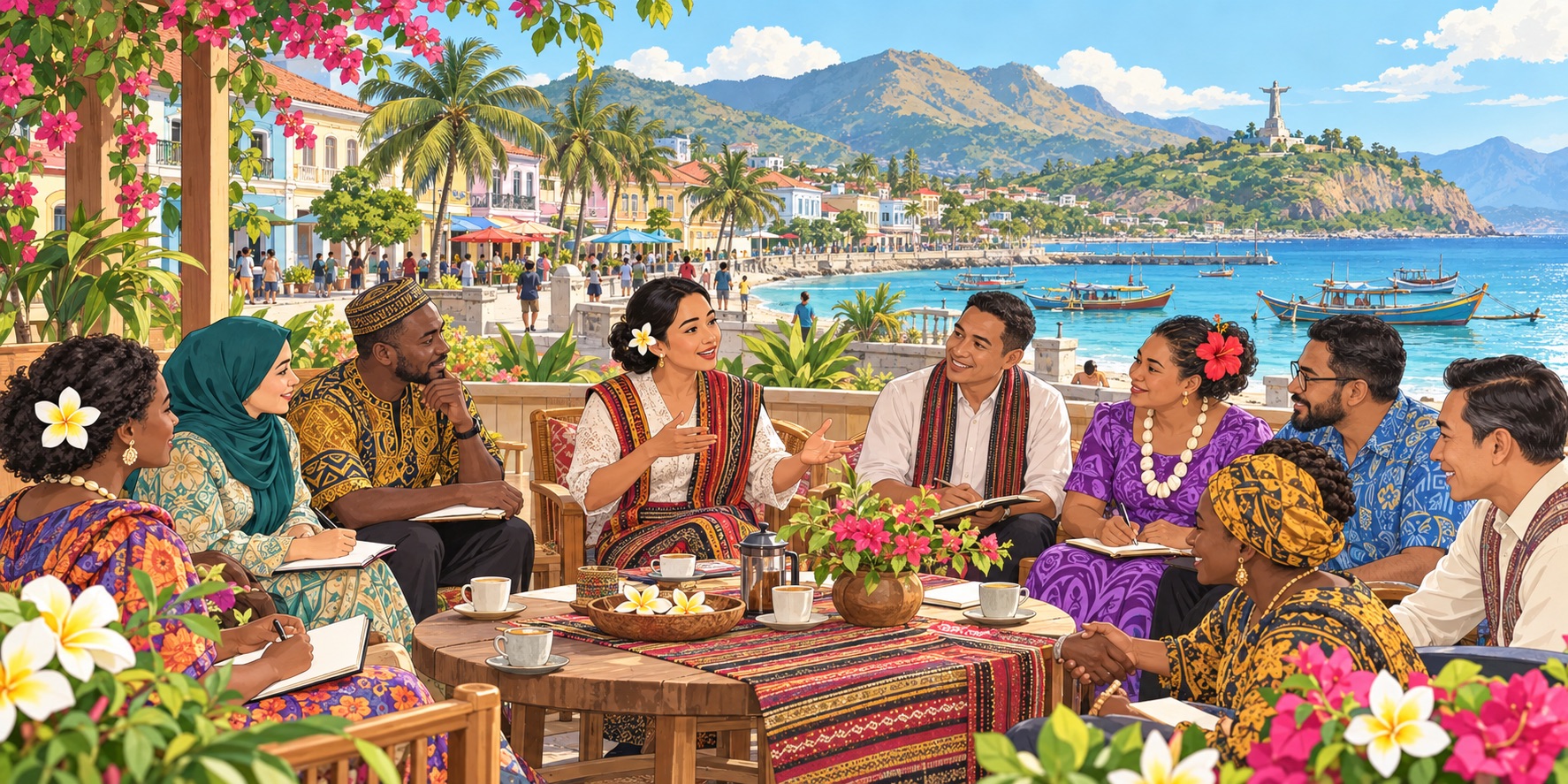
The g7+ gives this philosophy a practical channel through Fragile-to-Fragile cooperation: countries facing difficult transitions exchange experience, develop skills and support one another. Shared challenges can make advice more relevant, although each country must adapt lessons to its own circumstances.
One recent example connected Dili with Honiara. In July 2025, a 23-person Timorese delegation visited Solomon Islands, bringing together officials and specialists involved in minerals, geoscience and resource governance. Discussions focused on exchanging experience and developing cooperation over natural resources through the g7+ framework.
Such exchanges address consequential questions: how can resource wealth support public services, strengthen institutions and create lasting opportunities? A visit does not establish that those outcomes have been achieved, but it creates a working relationship through which countries can pursue them.
Connecting Global Advocacy with Local Accountability
The g7+ gained UN General Assembly observer status in 2019, strengthening its access to international discussions. This supports collective advocacy; it does not give the organisation its own General Assembly vote.
Its April 2025 Dili Resolution called for predictable international support and greater participation by women and marginalised groups in peace processes. These commitments highlight an essential test: national ownership must include people outside government, especially communities most affected by conflict.
Timor-Leste’s admission as ASEAN’s eleventh member in October 2025 adds a regional dimension to this experience. Its g7+ work offers Southeast Asia another perspective on recovery, without suggesting that one country’s reconciliation process can be copied everywhere.
Dili’s contribution is a powerful invitation to listen differently. Countries that have endured conflict can help shape international solutions—and the strongest measure of that cooperation will be safer communities, trusted institutions and better everyday lives.


