


When the League of Nations was established on 10 January 1920, Thailand was the only country in Southeast Asia recorded as an original member. At the time, much of the region was still under colonial rule. Indonesia, Vietnam, Myanmar, Malaysia, and the Philippines had yet to become independent countries as they are today.
However, Thailand did not secure its place in the League by chance. Then known as Siam, the kingdom had first become involved in World War I. That decision opened the way for Siam to pursue a more equal standing alongside Western powers.
The War That Changed Siam’s Global Standing
At the beginning of World War I, Siam chose to remain neutral. However, on 22 July 1917, the kingdom declared war on Germany and Austria-Hungary.
The government subsequently seized nine German merchant ships in Bangkok and interned around 260 German and Austrian nationals before deporting them to India.
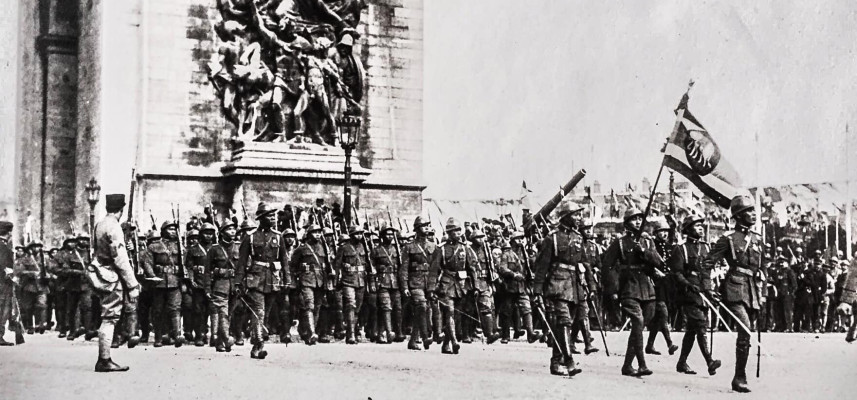
Siam also sent around 1,300 volunteers to Europe in 1918. A year later, its troops took part in victory parades in Paris, London, and Brussels in July 1919. Their participation placed Siam among the countries celebrating the Allied victory after the war.
You can read the full story of Thailand’s role in World War I here.
The Fight to Make Siam an Equal on the World Stage
After the war, the victorious powers gathered at the Paris Peace Conference in 1919 to discuss a new international order. Siam attended the conference but was initially allocated only one seat for its delegation. After protesting the decision, it secured a second seat.
Yet Siam had a larger objective. The kingdom wanted to end unequal treaties that granted foreign nationals special privileges in its territory, including exemptions from local courts.
This effort produced a significant result. Article 135 of the Treaty of Versailles terminated treaties between Germany and Siam, including provisions on extraterritorial rights, effective from 22 July 1917.
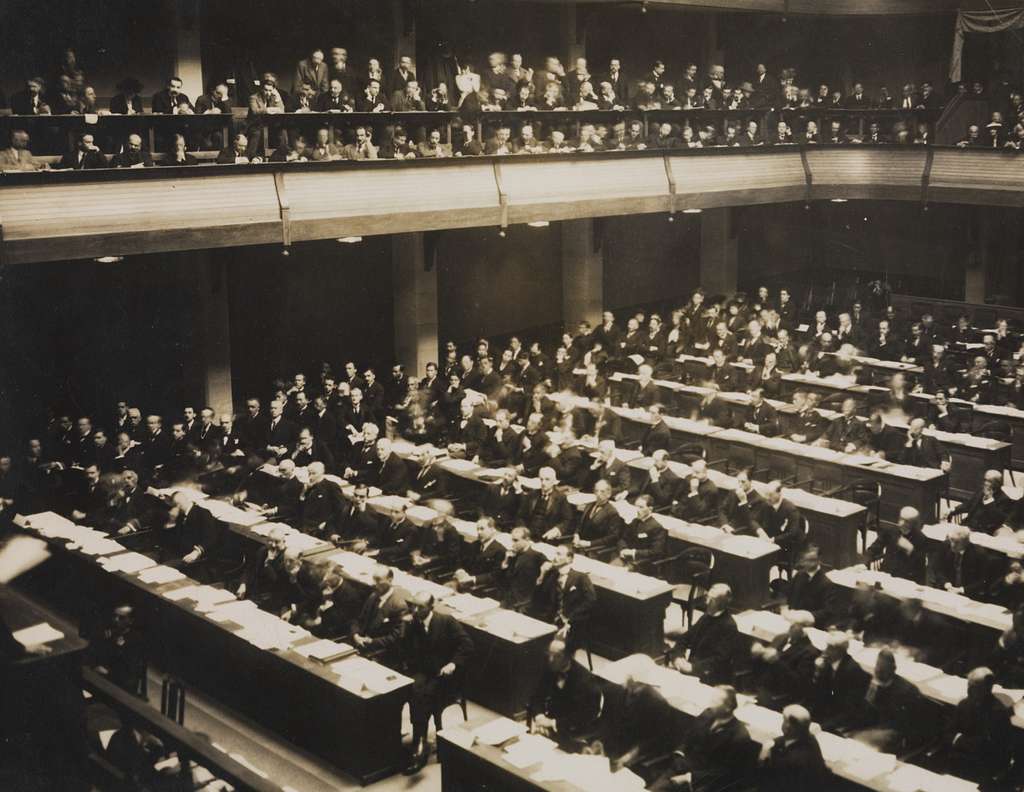
Siam eventually became an original member of the League of Nations. However, membership did not automatically translate into greater influence over the organisation’s decisions.
In 1928, Siam ran for a non-permanent seat on the League Council allocated to Asia. It received only six votes, far fewer than Persia’s 40, and eventually withdrew its candidacy.
Siam’s Balancing Act in a Divided World
One of Siam’s most notable decisions came on 24 February 1933, when the League discussed the conflict in Manchuria following Japan’s occupation of the Chinese territory.
The Siamese government chose not to take sides, partly out of concern that sanctions against Japan could disrupt its rice exports.
During the session, Siamese diplomat Luang Bhadravadi declared, “Abstention!” Of the 44 delegates present, 42 supported a report condemning Japan’s actions, Japan voted against it, and Siam abstained.
Following the vote, the Japanese delegation, led by Yosuke Matsuoka, announced that Japan would withdraw from the League and walked out of the chamber.
Siam's decision even made headlines in Tokyo. One report, titled "Japan Thanks Siam for Not Voting on Manchurian Report," was broadcast by Transocean Radio.
However, abstention was not Siam’s only response to international conflicts. When Italy invaded Ethiopia in 1935, Siam supported the League’s sanctions against Italy, despite opposition from its Ministry of Defence and lobbying efforts by the Italian envoy in Bangkok.
In 1937, however, Siam abstained again when the League discussed Japanese aggression against China.
What Came After the League of Nations
The League of Nations held the final session of its Assembly in April 1946, but Siam did not attend. A month later, Siamese Foreign Minister Direck Jayanama wrote to United Nations Secretary-General Trygve Lie, describing Siam’s status as an original member of the League as an honour (Hell, 2007, pp. 78–80).
The League was dissolved in 1946 and succeeded by the United Nations (UN). On 12 December that year, Siam joined the UN as its 55th member, continuing its participation in international organisations after the League’s dissolution.


