

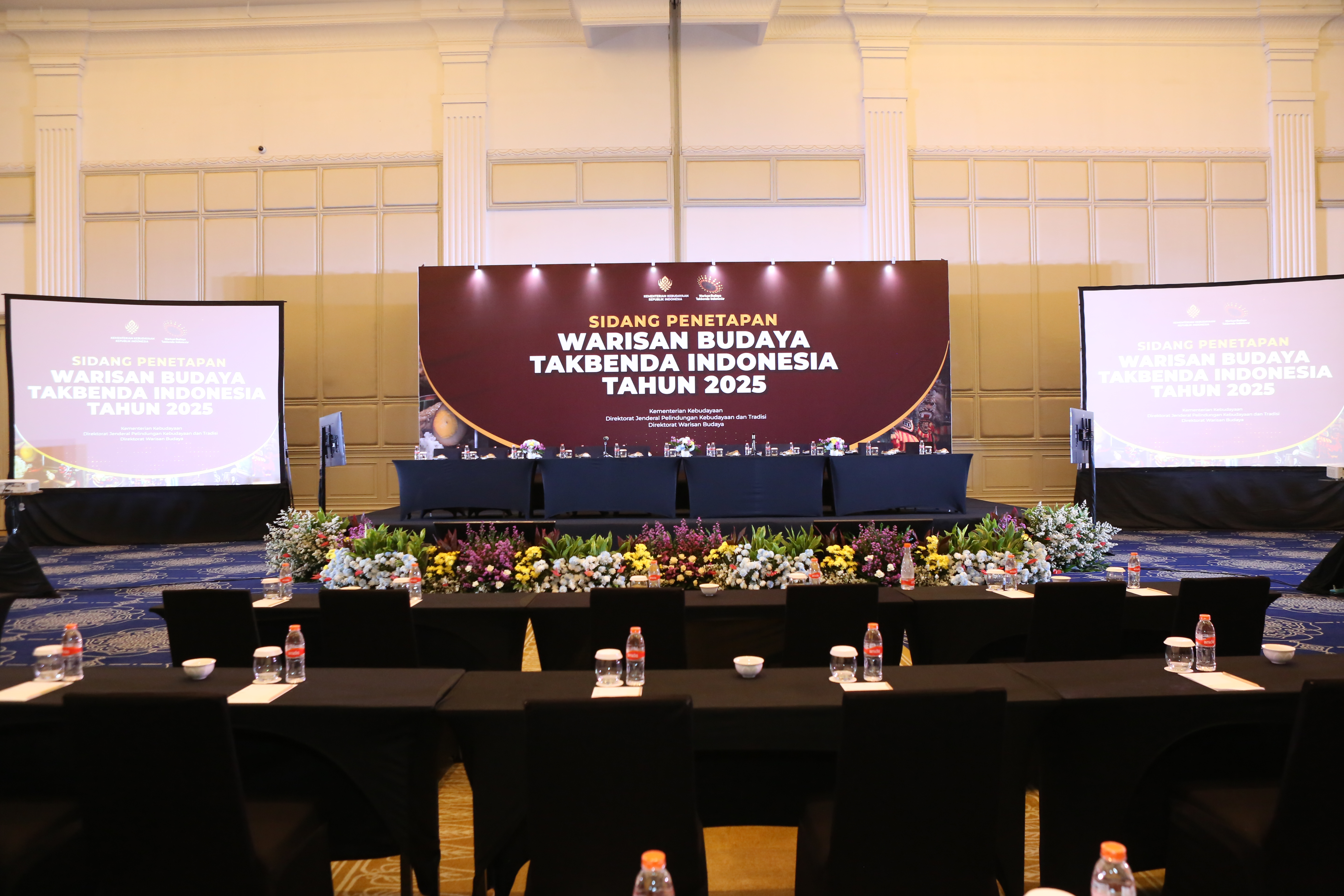
Indonesia has marked another milestone in its cultural preservation journey. During the Hearing for the Determination of Proposed Intangible Cultural Heritage of Indonesia held in Jakarta on Friday (October 10, 2025) the Ministry of Culture’s Directorate General of Cultural Protection and Traditions announced that 514 cultural elements were recommended for designation as Indonesia’s Intangible Cultural Heritage (ICH).
This year’s session reviewed 522 proposals from local governments across the archipelago. Of these, 514 elements were recommended for designation, while eight proposals were deferred for further refinement.
The results were formalized in the Official Record of the Intangible Cultural Heritage Designation Session, signed by the Director General of Cultural Protection and Traditions, the Director of Cultural Heritage, the Expert Team on Intangible Cultural Heritage, and provincial representatives from across Indonesia.
The formal designation will later be enacted through a Ministerial Decree, with Intangible Cultural Heritage Certificates presented by the Minister of Culture to each provincial head.
A Collaborative Milestone
In his remarks, Wawan Yogaswara, Secretary of the Directorate General of Cultural Protection and Traditions, emphasized the collective spirit behind this achievement.
“This year’s Intangible Cultural Heritage designation is the result of collaborative work involving many parties,” Yogaswara said.
“We extend our gratitude to the Expert Team on Intangible Cultural Heritage, provincial and local culture offices, maestros, academics, cultural practitioners, indigenous communities, and all stakeholders who actively contributed to the proposal and facilitation process.”
Since the national designation program began in 2013, Indonesia’s documentation of its living heritage has grown significantly. The cumulative record of designations per year is as follows:
| Year | Number of ICH Elements |
|---|---|
| 2013 | 77 |
| 2014 | 96 |
| 2015 | 121 |
| 2016 | 150 |
| 2017 | 150 |
| 2018 | 225 |
| 2019 | 267 |
| 2020 | 153 |
| 2021 | 289 |
| 2022 | 200 |
| 2023 | 213 |
| 2024 | 272 |
| 2025 | 514 (Recommended) |
With the 2025 additions, Indonesia’s total Intangible Cultural Heritage record reaches 3,227 elements.
The Meaning Behind the Numbers
According to Yogaswara, the ICH program is far more than a bureaucratic process.
“Designation is not merely an administrative matter. It represents the state’s recognition of the living cultural identities within our communities,” he emphasized. “From this recognition, we derive the foundation for protection, development, utilization, and guidance of our cultural assets.”
He also referred to Law No. 5 of 2017 on the Advancement of Culture as the legal framework underpinning Indonesia’s approach to heritage preservation, structured around four key pillars:
- Protection – Ensuring every tradition is documented, legally safeguarded, and supported by local regulations and early warning systems for endangered traditions.
- Development – Encouraging research, innovation, and creative space for the younger generation to engage with living traditions.
- Utilization – Positioning cultural heritage as a resource for sustainable creative economies and tourism, benefiting local communities.
- Fostering – Strengthening community capacity through education, training, and intergenerational knowledge transfer.
A Collaborative Effort Across the Archipelago
The 2025 session showcases the increasing dedication of local governments to documenting and safeguarding their distinctive cultural traditions. These elements, ranging from traditional rituals and oral storytelling to craftsmanship, performing arts, and indigenous knowledge of nature, reflect Indonesia’s rich diversity and creativity.
The 2025 ICH recommendations underscore Indonesia’s ongoing mission to protect its intangible cultural heritage. The government aims to ensure that every living tradition, regardless of its size or origin, continues to thrive as part of the nation’s collective identity.
“This achievement demonstrates the strength of collaboration and our shared spirit to preserve the culture that lives among the people,” Yogaswara said.
As Indonesia steps into a new era of cultural resilience, the recognition of 514 cultural elements marks not only a record-breaking achievement but also a reaffirmation of the nation’s unwavering dedication to protecting its living heritage.
This article was updated on October 13, 2025.