


For generations, many Southeast Asian men have been taught that strength means endurance. A good father works through pain. A good husband puts his family first. A good son does not complain. Across villages, cities, factories, farms, and offices throughout the region, countless men have embraced these values with pride.
Yet during Men's Health Month, health experts across Southeast Asia are encouraging a different conversation: true strength is not ignoring illness but taking care of oneself before it becomes too late.
In a region home to more than 680 million people, men continue to face some of the most significant health challenges of the modern era. From smoking-related diseases and heart conditions to mental health struggles and preventable cancers, the health of Southeast Asian men has become an increasingly urgent public health concern.
The Hidden Cost of Being Strong
Throughout much of Southeast Asia, cultural expectations often discourage men from seeking medical attention. The pressure to remain productive and financially responsible can make routine health screenings feel secondary to work and family obligations.
Dr. Vivek Murthy, former Surgeon General of the United States, once observed, "The greatest challenge in men's health is not the diseases themselves, but getting men to seek help early."
That observation resonates strongly across ASEAN countries. Many men delay medical consultations until symptoms become severe. In some cases, diseases that could have been detected early are only discovered after significant complications emerge.
The challenge extends beyond physical health. Mental health remains one of the least discussed aspects of men's wellbeing. Depression, anxiety, stress, and burnout often remain hidden behind cultural expectations of resilience and emotional control.
Tobacco and Heart Disease: Southeast Asia's Silent Killers
Few regions illustrate the challenge more clearly than Southeast Asia's tobacco crisis.
Indonesia has one of the highest male smoking rates in the world, with more than 60 percent of adult men using tobacco products. Similar concerns exist across parts of Vietnam, Myanmar, and the Philippines.
The consequences are severe. Smoking significantly increases the risk of chronic obstructive pulmonary disease (COPD), stroke, heart disease, and lung cancer. These illnesses continue to place enormous pressure on families and healthcare systems across the region.
At the same time, rapid urbanization has transformed lifestyles and eating habits. Traditional diets rich in vegetables, fish, and fresh ingredients have increasingly been replaced by processed foods high in salt, sugar, and unhealthy fats.
As a result, cardiovascular disease has emerged as the leading cause of death in many ASEAN countries. Increasingly, these conditions are affecting men during their most productive years, often in their thirties, forties, and fifties.
The Overlooked Health Challenges
Beyond heart disease and smoking, Southeast Asian men face elevated risks of liver and gastric cancers.
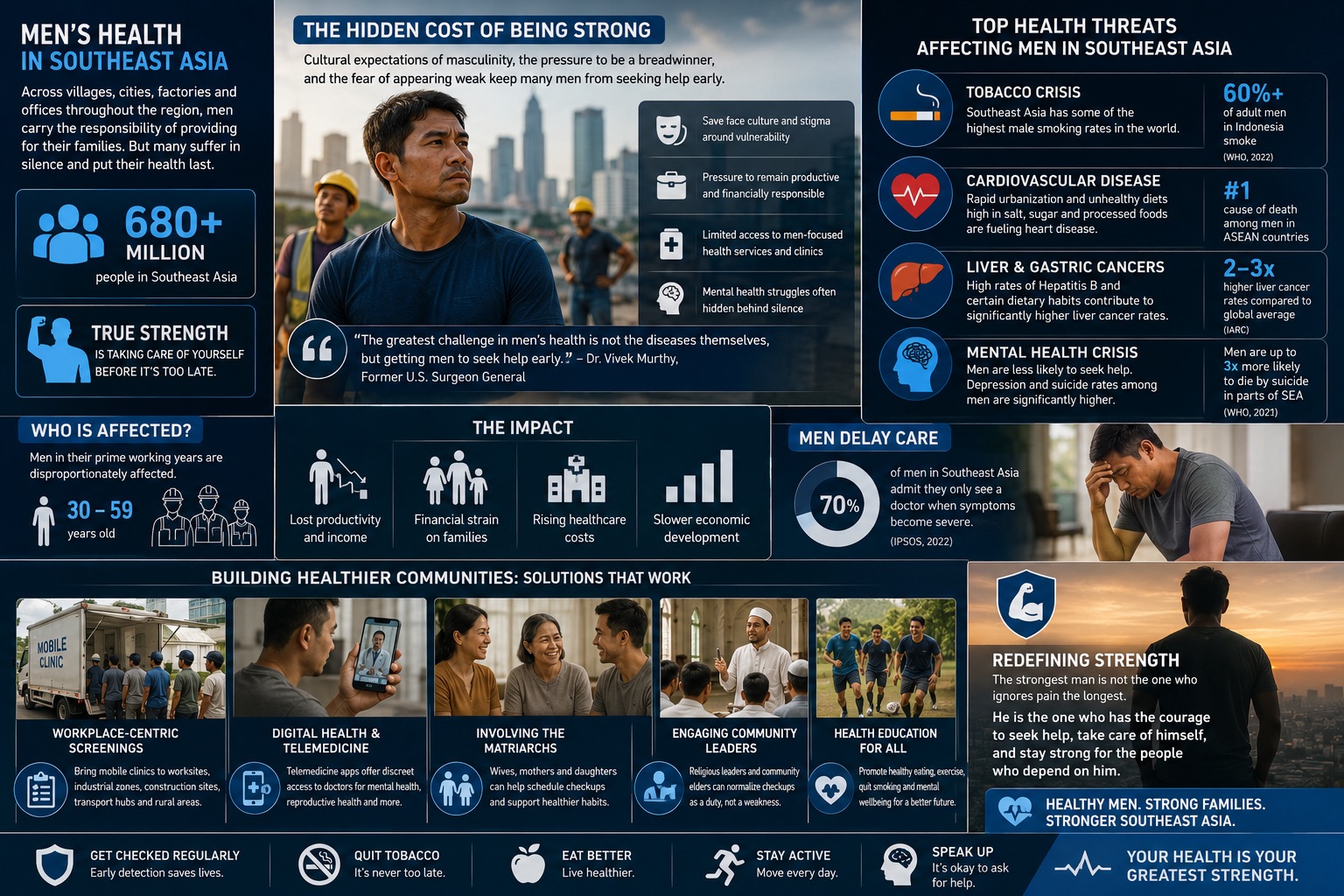
Chronic Hepatitis B infections remain relatively common across parts of Asia, contributing to liver cancer rates that exceed global averages. Medical professionals continue to emphasize the importance of vaccination, regular screening, and early intervention.
Mental health represents another growing concern. In countries such as Thailand and Vietnam, suicide rates among men remain significantly higher than among women. Experts often attribute this disparity to cultural stigma, limited access to mental health services, and societal expectations that discourage men from expressing vulnerability.
While awareness has improved in recent years, many men continue to suffer in silence.
Building Healthier Communities
Despite these challenges, there are encouraging signs across the region.
Governments, healthcare providers, and community organizations are increasingly bringing health services directly to where men live and work. Mobile clinics now visit industrial zones, construction sites, transportation hubs, and rural communities.
Technology is also helping bridge long-standing barriers. Telemedicine platforms in Indonesia, Vietnam, Malaysia, and the Philippines allow men to consult doctors privately about sensitive issues, including mental health, reproductive health, and chronic diseases.
Community leaders are playing an important role as well. Across Southeast Asia, religious institutions, local organizations, and neighborhood groups have begun promoting routine health screenings as a responsibility rather than a sign of weakness.
In many families, women remain powerful advocates for men's health. Mothers, wives, daughters, and sisters often encourage regular checkups and healthier lifestyles, helping transform healthcare from an individual issue into a family priority.
Redefining Strength
Men's Health Month serves as a reminder that health is not merely a personal matter. It influences families, workplaces, communities, and entire nations.
As Southeast Asia continues to grow economically and socially, the wellbeing of its men will remain closely tied to the region's future development. Strong economies require healthy workers. Strong families require healthy fathers, sons, brothers, and husbands.
Perhaps the definition of strength itself is evolving. The strongest man is not necessarily the one who ignores pain the longest. It may be the one who has the courage to seek help, prioritize his wellbeing, and ensure that he remains present for the people who depend on him.
Across Southeast Asia, that simple shift in mindset could save countless lives—and build healthier communities for generations to come.


