In Laos sticky rice serves as the daily staple food for the Laotian people. Meanwhile, regular white rice is less popular.
Known locally as Khao Niao, the sticky rice takes over the main role of regular rice. Laotians consume it routinely from breakfast until dinner.
Understanding the Identity Behind Khao Niao
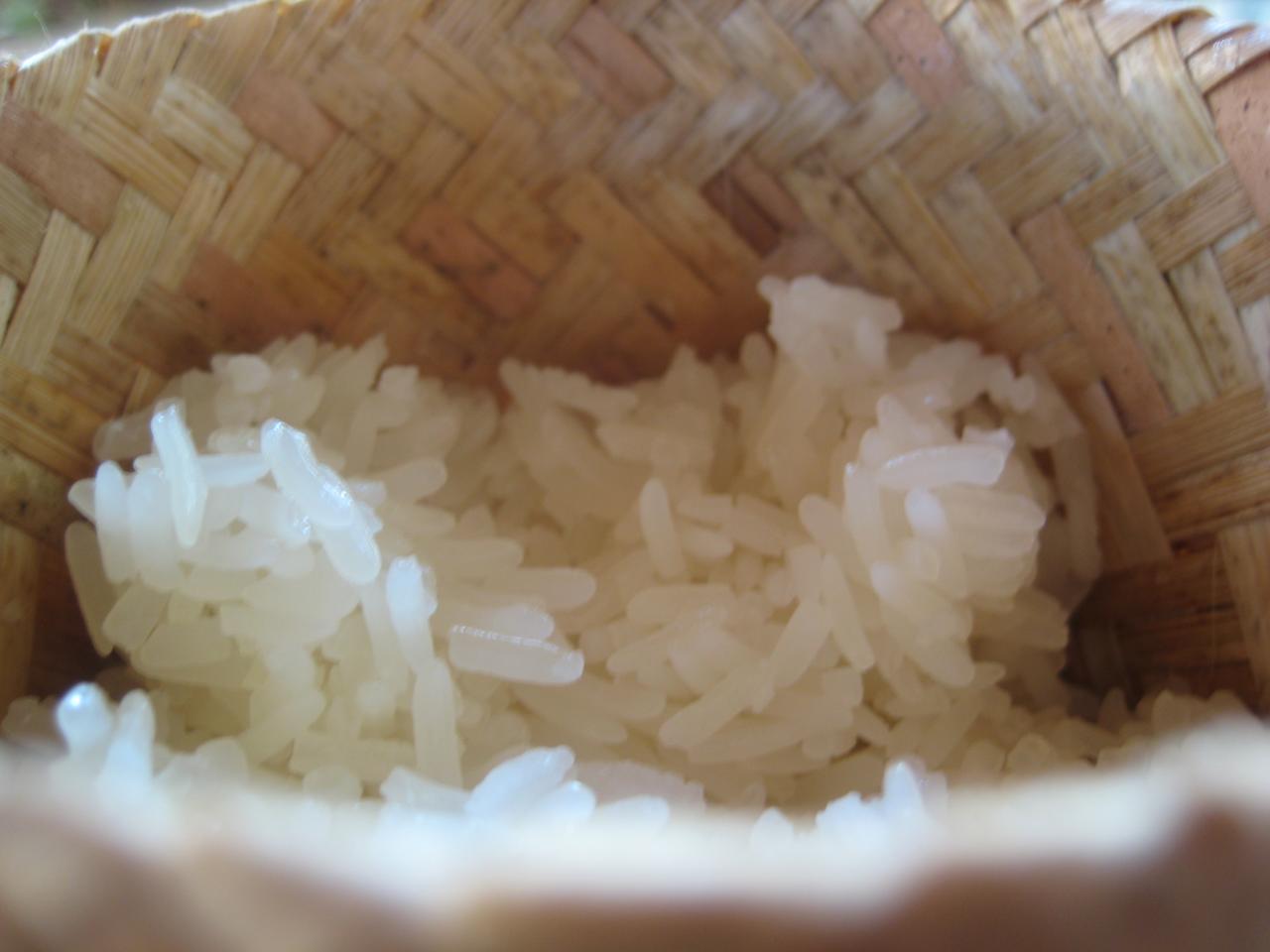
The consistent daily consumption forms a unique national identity for the citizens of Laos. They call themselves Luk Khao Niao which means the children of sticky rice.
Historically, their deep-rooted connection with sticky rice was shaped by the mountainous and landlocked terrain of Laos.
Local Lao communities had to rely entirely on upland farming to cultivate indigenous wild varieties of sticky rice that thrived in the dry hill soils where regular white rice failed to grow. This reliance transformed agricultural survival into a profound social bond.
Their cultural connection is strongly reflected in the actual food data on the ground. Based on periodic reports from the Food and Agriculture Organization (FAO) in 2023, the per capita rice consumption in Laos reached approximately 206 kilograms per person every year.
The figure places Laos as one of the countries with the highest rates of rice consumption in the world. Interestingly, around 80% to 90% of the total national rice consumption and production is purely dominated by the sticky variety (glutinous rice).
Thip Khao, The Sensation of Bare Hands Eating
The strong cultural connection gives rise to very specific storage tools and dining methods in daily life. Freshly cooked sticky rice is not placed in modern plastic containers, but rather in a signature woven bamboo basket called a Thip Khao.
The woven bamboo design with a double-walled system works as a remarkably smart natural temperature regulator. Its loose density allows excess steam to escape slowly so that the sticky rice remains warm and chewy without becoming soggy from trapped moisture.
The people of Laos always enjoy this staple food using their bare right hand to get the best texture experience.
The process begins by taking a small handful of warm sticky rice, then kneading it gently between the fingers to form a tight little ball. This dense ball is then utilized as a natural spoon to scoop up the main side dishes served on the table.
The Popular Companions of Lao Sticky Rice

The people of Laos frequently serve the warm rice ball alongside a favorite local dish called Goi Paa. This menu is a local minced river fish salad that is tossed dry with fresh herbal spices, lime juice, and bird's eye chilies without any flooded liquid broth.
Its dry texture makes the shredded fish meat very easy to pinch directly using the lump of sticky rice without ruining the adhesion of the grains in the hand.
The intense savory-fresh flavor of this fish salad specifically functions to balance the natural plain-sweet taste of the sticky rice taken from the bamboo basket.

In addition to the fish salad, another primary companion dish that completes the daily meal cycle on the table is Tam Mak Hoong.
The local version of young papaya salad is coarsely pounded with chilies and pungent fermented fish paste to produce a very thick liquid seasoning. The thickness of the dressing that tightly clings to the shredded papaya makes the spicy spices lift perfectly.