


For digital nomads, Southeast Asia is often synonymous with Bali, Bangkok, or Kuala Lumpur. Yet beyond these established hubs lies Myanmar—a destination that offers something increasingly rare in today's connected world: authenticity. While the country is not currently a mainstream choice for remote workers due to its evolving political and security landscape, a small community of expatriates, humanitarian professionals, researchers, and long-term travelers continue to find meaning in its rich cultural heritage and remarkably resilient people.
Unlike neighboring countries that actively market themselves to digital nomads, Myanmar appeals to those willing to exchange convenience for cultural immersion. Remote work here is less about beachfront coworking spaces and more about living among centuries-old traditions, historic cities, and communities whose warmth leaves lasting impressions.
Yangon: Where History and Modern Life Coexist
Myanmar's largest city remains the country's commercial and economic center, offering the closest experience to an urban remote-working environment.
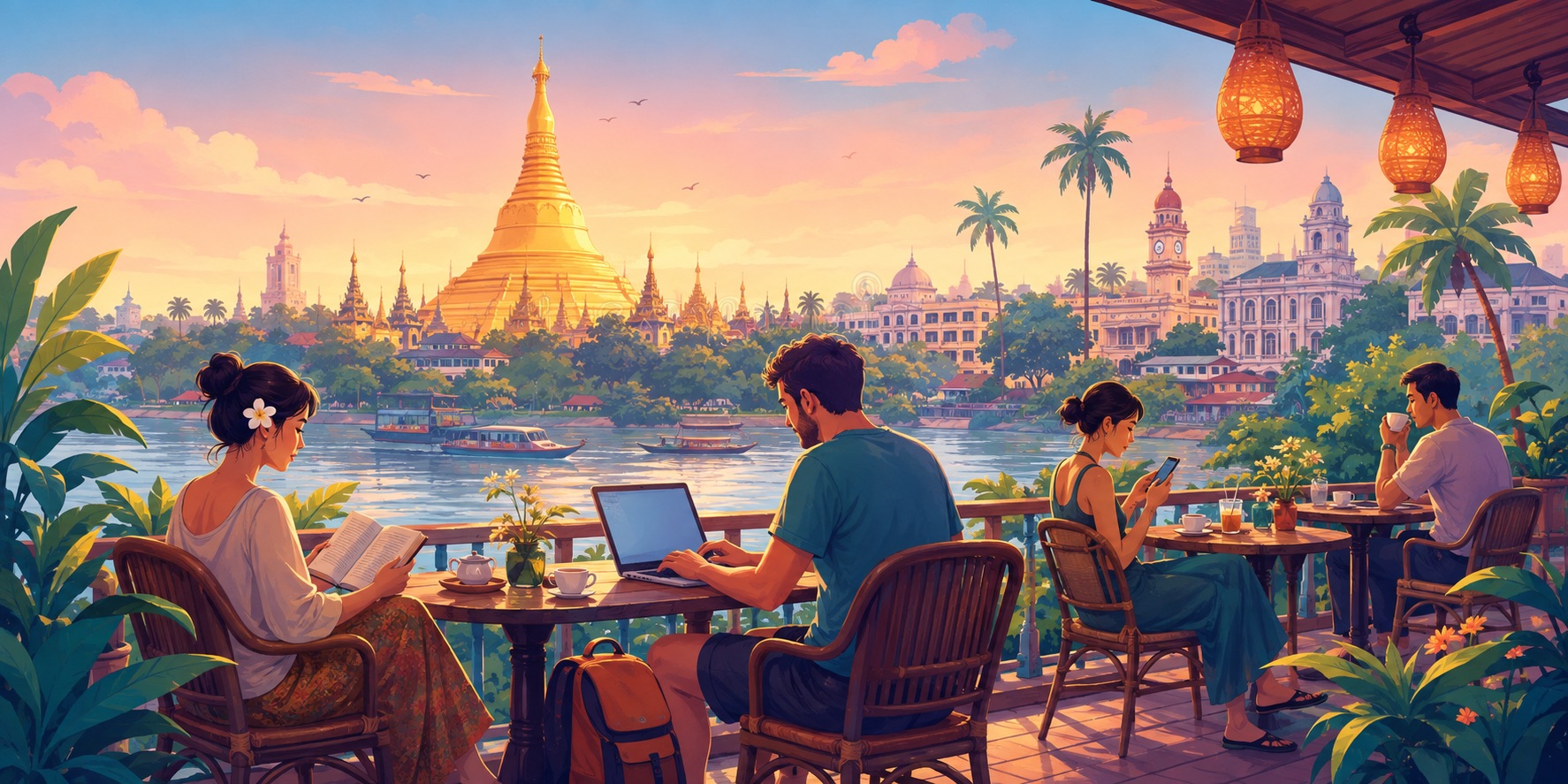
Yangon unfolds beneath the golden silhouette of the nearly 2,500-year-old Shwedagon Pagoda, while elegant colonial-era buildings, tree-lined boulevards, bustling tea shops, and colorful street markets reflect the city's layered past. Unlike most Southeast Asian capitals, motorcycles remain prohibited within central Yangon, creating a noticeably calmer urban atmosphere.
For remote professionals based in the city, a small but growing collection of coworking spaces, independent cafés, and business districts provide the country's most dependable digital infrastructure. Many expatriates choose neighborhoods around downtown and the Yaw Min Gyi area, where cafés combine reliable internet with Myanmar's famous tea culture.
Travel writer and long-term Southeast Asia resident Paul Clammer once observed, "Yangon is one of Asia's most atmospheric cities, where the past is never far from the present." That atmosphere continues to draw photographers, writers, historians, and cultural researchers seeking inspiration beyond conventional destinations.
Mandalay: The Soul of Myanmar
About 600 kilometers north, Mandalay presents an entirely different pace of life.
Once the final royal capital of the Burmese Kingdom, the city remains deeply rooted in traditional arts, Buddhist scholarship, and centuries-old craftsmanship. The vast Royal Palace, surrounded by its iconic moat, serves as a reminder of Myanmar's royal legacy, while nearby U Bein Bridge—the world's longest teakwood bridge—welcomes visitors each morning and evening with scenes that have become symbols of the country itself.
Life in Mandalay revolves around bicycles, motorbikes, local markets, monasteries, and family-run workshops producing gold leaf, wood carvings, silk weaving, and traditional puppetry.
For digital nomads whose work intersects with anthropology, heritage preservation, education, or language studies, Mandalay offers an immersive environment rarely found elsewhere in Southeast Asia.
Remote Work Requires Preparation
Myanmar's greatest attractions are accompanied by practical realities that every prospective remote worker must carefully evaluate.
The country currently has no dedicated digital nomad visa, meaning foreigners typically enter using tourist or business visas depending on the nature of their stay. Visa requirements continue to evolve, making advance planning essential.
Reliable electricity also cannot be taken for granted. Scheduled and unscheduled power outages remain common in many areas, prompting expatriates to prioritize accommodations equipped with backup generators and strong mobile data coverage. Many professionals rely on multiple internet connections to ensure uninterrupted work.
Financial planning is equally important. International bank cards are accepted only in selected establishments, while cash—particularly clean, undamaged US dollar notes for currency exchange—remains indispensable in many situations.
Travel within Myanmar also requires careful consideration. Although central Yangon and Mandalay continue to function as major urban centers, security conditions differ significantly across the country. Travelers are strongly advised to monitor official government travel advisories, comply with local regulations, and use domestic flights where appropriate instead of long overland journeys.
These operational realities mean Myanmar is better suited to experienced travelers than first-time digital nomads.
The Human Side of Myanmar
Yet those who choose Myanmar often speak less about infrastructure than about its people.
Hospitality remains one of the country's defining characteristics. Tea shop conversations frequently turn into invitations to family celebrations, local festivals, or neighborhood gatherings. The absence of mass tourism in many areas allows visitors to experience everyday life with remarkable authenticity.
Former United Nations Secretary-General U Thant, one of Myanmar's most respected international figures, once remarked, "Peace can only last where human rights are respected, where the people are fed, and where individuals and nations are free." His words continue to reflect the aspirations of many Myanmar citizens who remain deeply committed to preserving their country's rich cultural identity.
Tourism Slowly Rebuilding
Myanmar's tourism sector is gradually recovering after years of unprecedented disruption. According to the Ministry of Hotels and Tourism, the country welcomed more than one million international visitors in 2024, marking a significant improvement compared with previous years, although still well below pre-pandemic levels. Thailand, China, India, and neighboring ASEAN countries remain among the principal sources of visitors.
Despite current challenges, destinations such as Yangon, Mandalay, Bagan, Inle Lake, and Ngapali continue to represent some of Southeast Asia's most historically and culturally significant landscapes.
An Alternative Path for the Modern Nomad
Myanmar is unlikely to become Southeast Asia's next mainstream digital nomad hotspot anytime soon—and perhaps that is precisely its appeal.
Those who choose Myanmar are rarely searching for rooftop coworking spaces or trendy cafés featured on social media. Instead, they seek meaningful conversations, centuries-old traditions, spiritual landscapes, and a slower rhythm of life that encourages deeper human connection.
For resilient remote professionals willing to adapt to its realities, Myanmar offers something increasingly difficult to find in today's hyper-connected world: an experience that feels genuine, humbling, and profoundly unforgettable.


