Saddan Cave in Hpa-An is one of the largest limestone cave systems in Kayin State, Myanmar. The cave cuts completely through a massive karst mountain that is connecting a front entrance shrine to an isolated lake at the back.
Saddan Cave offers experience in two different environments in a single trip. The journey starts at a quiet Buddhist temple complex and ends with an open view of natural rice fields and limestone peaks.
The site attracts local worshippers throughout the year alongside foreign travelers exploring southern Myanmar. Reaching Hpa-An requires a five-hour drive from Yangon.
Ancient Buddhist Sanctuary Beneath Karst Hills
The front mouth of Saddan Cave functions as an active religious site for local pilgrims. Devotees visit the entrance chamber daily to pay respects and make offerings.

A large reclining Buddha statue sits inside a glass pavilion with decorated pillars near the entrance. A seated Buddha statue stands right beside the main structure, with a glowing red signboard installed on top of the pavilion roof.
Further into the chamber stands a tall golden pagoda resting on a raised square platform. A row of small golden statues lines the stone wall directly behind the main pagoda.

Gold-colored Buddhist carvings are embedded directly onto the dark limestone walls of the cavern. The small golden votive tablets are arranged systematically to form the distinct shape of an elephant with a pagoda figure on its back.
Inside the area, footwear is strictly prohibited from the moment visitors step onto the temple grounds outside. Everyone must walk barefoot across the cold stone floor before entering the darker sections of the cave.
Leaving shoes at the main gate means walking the entire cave interior without footwear. Carrying shoes in a backpack is recommended so visitors can wear them again upon exiting the back mouth.
The name Saddan originates from ancient Buddhist folklore about a legendary royal elephant. Local tradition holds that the elephant king once lived inside these mountain chambers and drank from the surrounding waters.
Small incense altars remain scattered along the perimeter walls where locals leave daily offerings. The scent of burning incense fills the outer chamber before giving way to damp cave air further inside.
Inside the Cave Passage
The main walking path runs continuously through the mountain interior. The environment inside consists of raw natural limestone formations with high ceilings and damp stone floors.
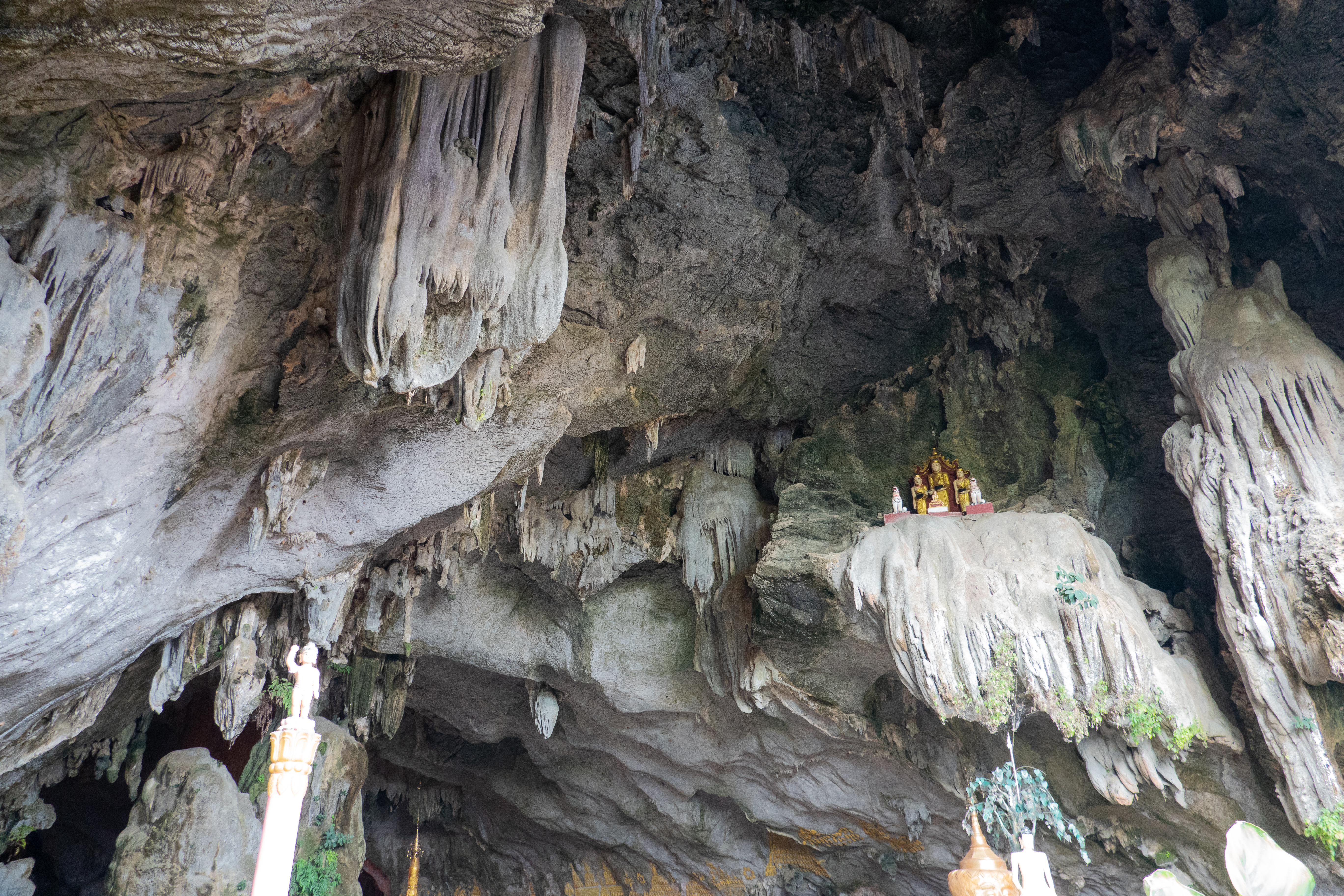
Thick stalactites extend downward from the upper rock ceilings throughout the corridor. Large natural limestone pillars also stand along the path, dividing the walking space into narrower lanes.
The floor stays damp with patches of mud and scattered bat droppings along the unpaved stone surface. Natural water drips continuously from the overhead rock formations onto the cave floor below.
The path remains unlit through most of the inner cavern. It is recommended to use flashlights to navigate the uneven ground inside the inner cavern.
Wooden Boat Ride Back Across Secret Waters

Emerging from the dark back exit reveals a hidden lake completely encircled by steep karst cliffs. Small wooden sampans operated by local villagers wait at the water edge to transport emerging travelers.
The boat ride follows a narrow stream that winds around the mountain base and passes through a low rock tunnel.
The surrounding wetland serves as an active agricultural zone for neighboring farm communities.