Papua New Guinea and Indonesia are separated by an 824 km land border that follows two straight north-south lines linked by a short stretch along the Fly River.
Most of it runs along the 141st meridian east. The two countries also rank first and second worldwide for languages spoken. 840 in Papua New Guinea and 706 in Indonesia, counting living indigenous languages, according to Ethnologue country profiles. Counts vary by source and depend on how languages are distinguished from dialects.
The United Nations nonetheless places them in different regions. Its M49 geographical classification groups Indonesia under Southeast Asia and Papua New Guinea under Oceania, specifically in the subregion of Melanesia.
One Island, Two Countries
New Guinea covers about 786,000 km² and is home to roughly 14.8 million people in 2020. The United Nations describes it as the world's second largest island after Greenland.
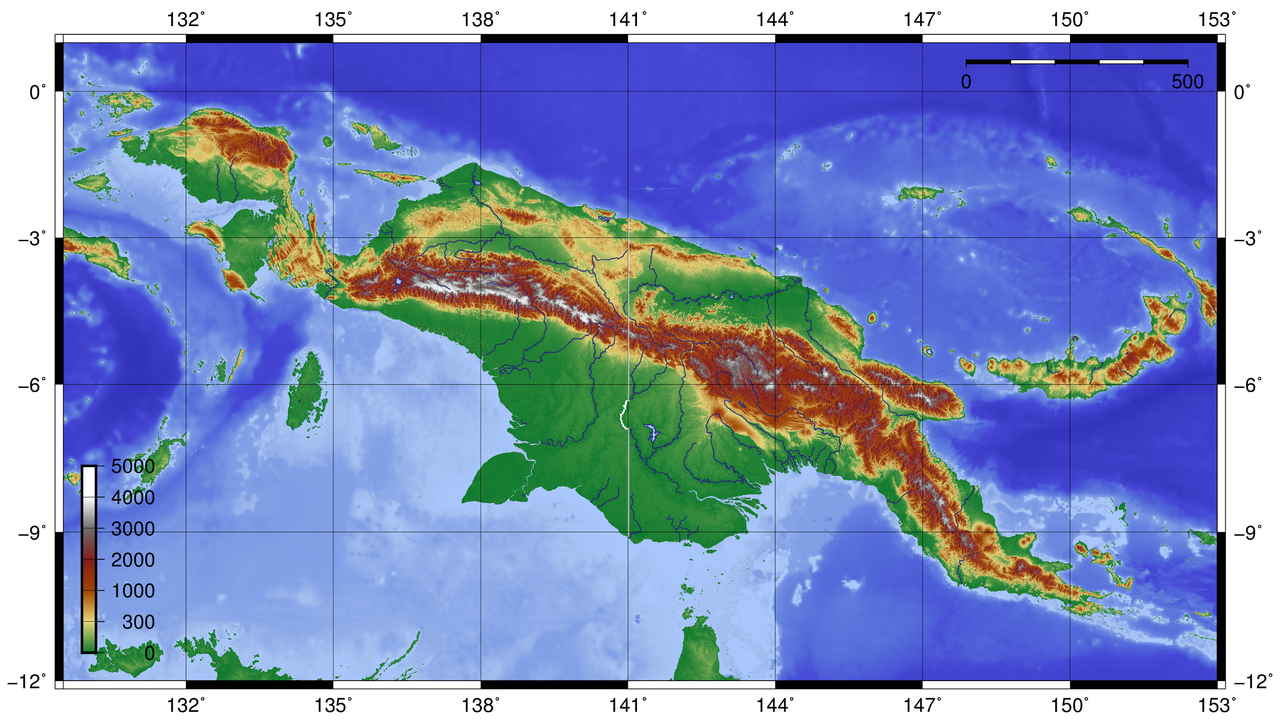
Papua New Guinea holds the eastern half. The western half is Indonesian territory, divided into six provinces. Papua, West Papua, Central Papua, Highland Papua, South Papua and Southwest Papua. The last four were created in 2022.
The island's two largest cities are Port Moresby in Papua New Guinea and Jayapura in Indonesia. PNG's 2024 census counted 756,754 people in the National Capital District, which covers Port Moresby, while Jayapura had roughly 404,000 residents in mid 2024, according to Statistics Indonesia (BPS).
Under the 1973 Australia-Indonesia boundary agreement, the border is almost a straight line running north to south, but not quite. Partway down, it follows the Fly River before returning to a meridian line and continuing south.
With an average freshwater discharge of about 6,000 cubic metres per second, the Fly is the largest river in Oceania by water flow, according to research published in the Journal of Geophysical Research: Earth Surface. It is also listed as the world's largest river without a dam in its catchment.
Why the UN Places It in Oceania
The UN's M49 standard is maintained by its Statistics Division and traces its origins to 1970, according to the UN Statistics Division. Melanesia, the subregion where it places Papua New Guinea, also includes Fiji, New Caledonia, the Solomon Islands and Vanuatu.
Among the four independent countries in the group, PNG is by far the most populous, with roughly 10.8 million people in 2026, according to Worldometer's compilation of UN data.
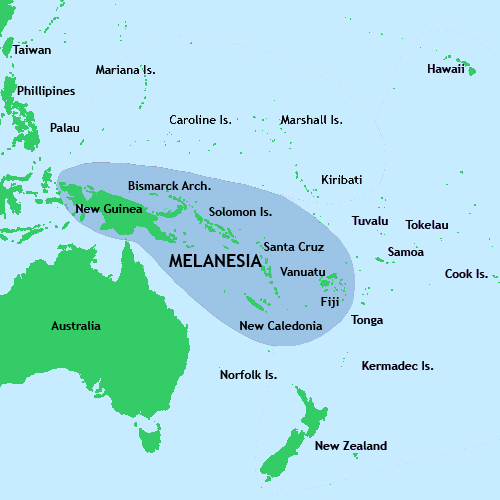
The name Melanesia is much older than the UN's system. French navigator Jules Dumont d'Urville introduced the term in 1832, drawing it from the Greek words for "black islands" and using it alongside Micronesia and the already established Polynesia to divide the Pacific into broad regional groupings, according to Melanesia: Beyond Diversity.
Some broader definitions of Melanesia also include the Indonesian half of New Guinea. The Melanesian Spearhead Group, a regional bloc that includes the four independent Melanesian countries, also reflects this shared identity.
The UN, for its part, says that M49's geographic groupings are intended for statistical convenience and do not imply any political or other affiliation among the countries or territories placed within them.
Could Papua New Guinea Join Southeast Asia Politically?
Papua New Guinea has been an ASEAN Special Observer since 1976, but it has never been a full member.
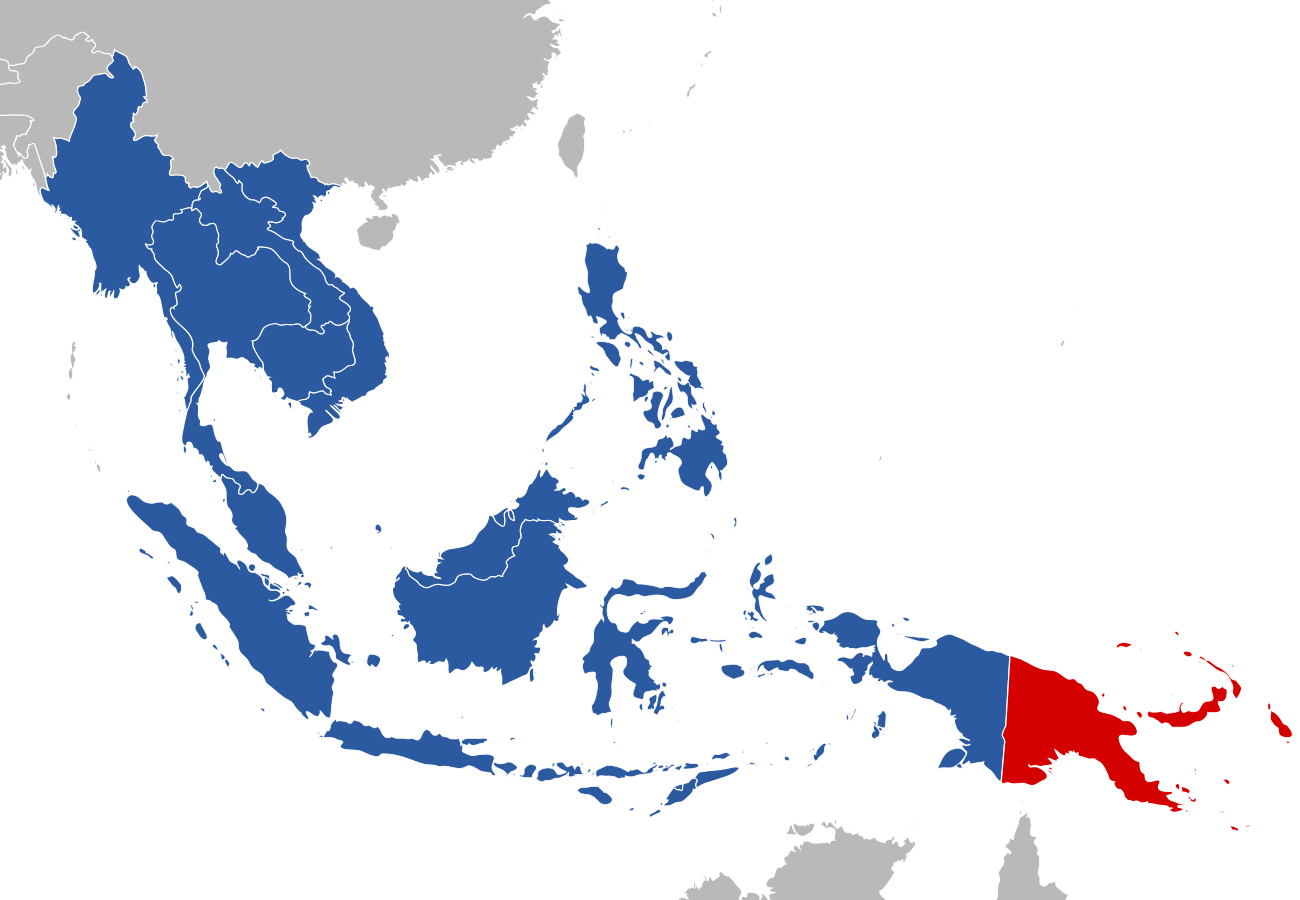
The idea got a fresh push in May 2025, when Indonesian President Prabowo Subianto proposed PNG's participation at the 46th ASEAN Summit in Kuala Lumpur. Two days later, ASEAN Secretary General Kao Kim Hourn said any bid would need consensus among the 11 member states and would also have to be addressed under the ASEAN Charter.
In July 2025, Foreign Minister Justin Tkatchenko told the ASEAN Regional Forum in Kuala Lumpur that full membership remained PNG's aspiration. According to PNG Government, no formal application had yet been submitted.
The Chair's Statement from the 48th ASEAN Summit in Cebu on 8 May 2026 noted the discussion on establishing modalities for PNG's role as a Special Observer. It did not mention membership.