In Bali, a funeral can look like a parade. Relatives and neighbors carry a tall, tiered tower through the streets, and some ceremonies also bring an animal shaped figure. The procession ends with the body being burned.
This is Ngaben, the cremation ritual of Balinese Hindus.
What Ngaben Means
Ngaben belongs to pitra yajña, the Hindu rites for the deceased, according to Ceraken, the cultural database run by the Bali Provincial Culture Office.
The database says its aim is to separate the atma from the body's five elements, known as Panca Maha Butha, and guide it toward the realm of Brahman.
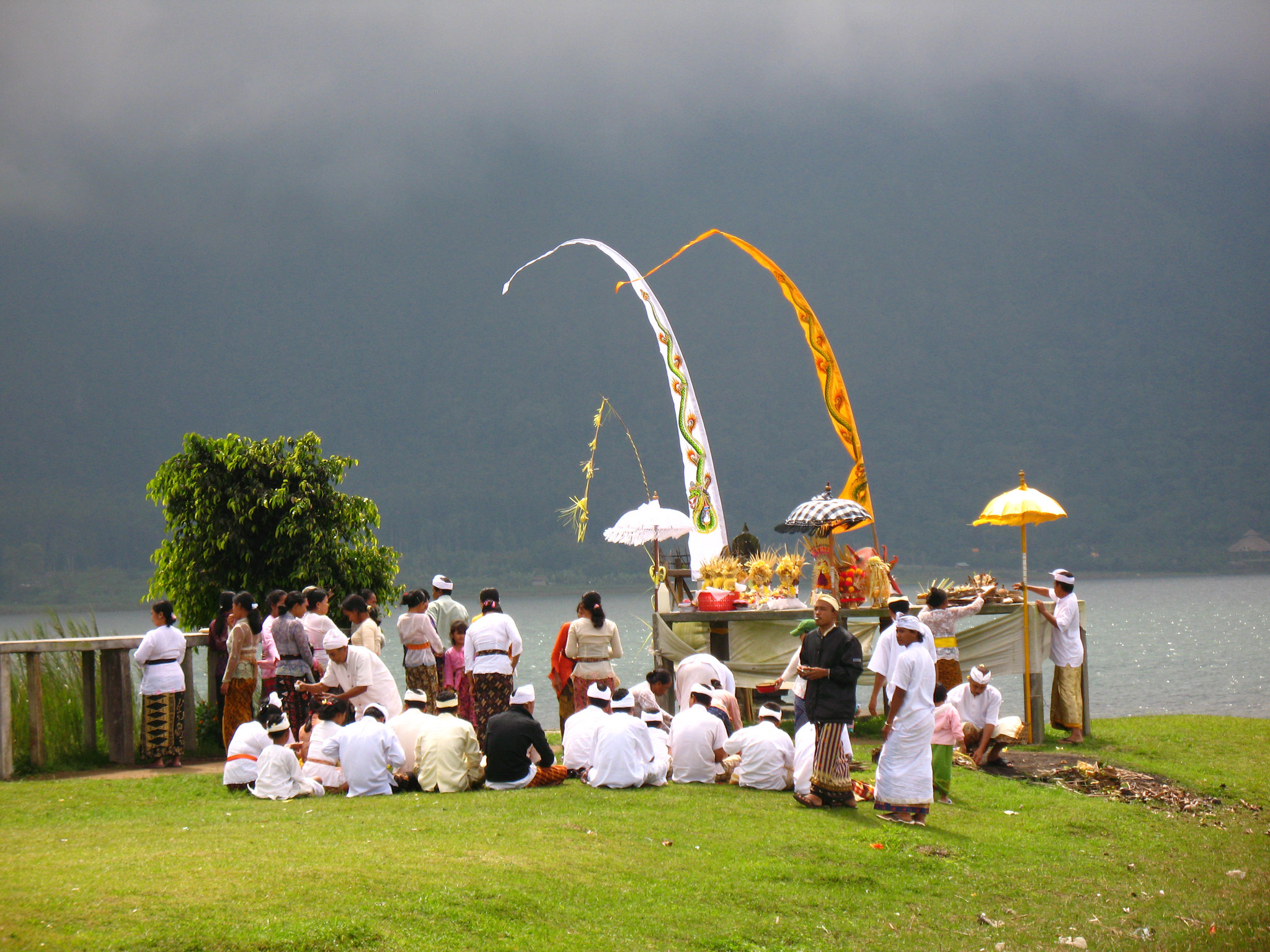
Fire does the central work. The same source says cremation purifies the body and speeds the return of those elements to the universe, and that Hindu teaching treats fire as a symbol of the god Brahma's power.
Ngaben can be performed in different forms and levels of ceremony, with local custom, known as dresta, influencing how some steps are carried out. Indonesia designated Ngaben as an item of Intangible Cultural Heritage in 2023.
What the Procession Carries
Before the cremation takes place, the body is carried through the village in a procession involving several traditional structures, each serving a different purpose.
A bade is a temporary, lightweight structure with layered tiers and a platform on top. It carries the body from the family home to the cemetery.
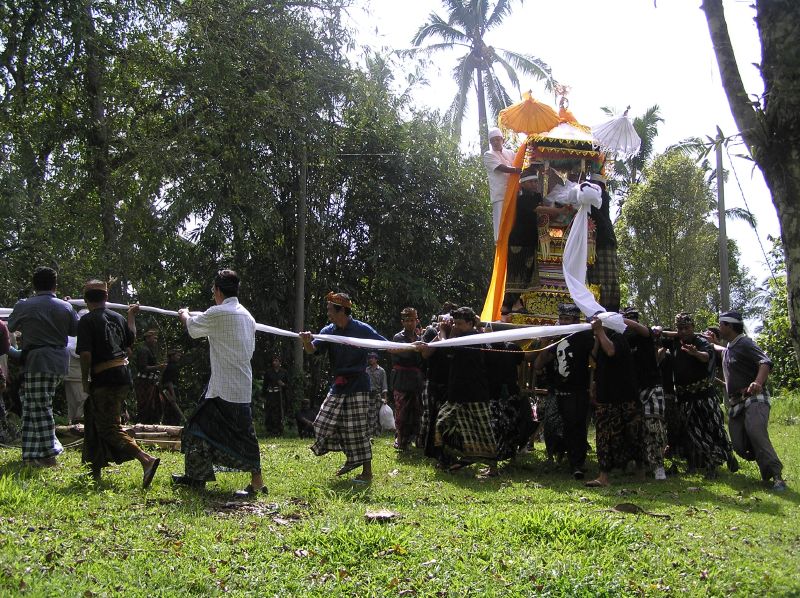
The patulangan holds the body during cremation. It usually takes the shape of a symbolic animal, though simpler versions exist, a plain box with legs and a tail, or, in an emergency, an animal shape made from banana stems.
But these structures are not used in every form of Ngaben. One of the simpler forms, Ngaben Swasta, is performed when no body is found. Ceraken says it uses neither a bade nor a petulangan.
The community takes part from the start. Members of the banjar, a local community group, build the platform used to bathe the body at the family's home, while a pandita, a Hindu priest, leads the religious rites.
The cost can be high, and not every family can afford a ceremony, according to the Ministry of Finance's regional office for Bali and Nusa Tenggara. It says the desa adat, or customary village, and the provincial government hold mass Ngaben for families in need.
How Ngaben Is Adapting to Modern Life
Some Balinese Hindu families now hold Ngaben at a crematorium instead of in their home village.
I Gde Pitana of Udayana University described cremation at a crematorium as a relatively new practice in a 2020 study published in Jurnal Kajian Bali. He found that Maha Gotra Pasek Sanak Sapta Rsi (MGPSSR), Bali's largest clan organization, pioneered the practice by building the Santha Yana crematorium in 2008.
Pitana found that the number of ceremonies at Santha Yana increased over time, mainly because of its practicality and efficiency compared with holding Ngaben in their own village. Lower costs and less intensive communication with the village were additional reasons, particularly for Balinese living outside Bali.
Although the setting is modern, Pitana found that Santha Yana's approach draws on an old lontar, a palm leaf manuscript, called Yama Purana Tatwa.
Ngaben is not the only funeral practice on the island.
In Trunyan, a village in Kintamani, Bangli Regency, some people are laid to rest through a practice called mepasah. The body is placed on the ground beneath a Taru Menyan tree, without being buried or cremated.
Villagers believe the tree helps neutralize the smell of decomposing bodies. Trunyan is also home to the Bali Aga, a Balinese community that was in Bali before Majapahit influence arrived.
Mepasah and Ngaben are both practiced in Bali, though Ngaben is far more widespread.