The International Space Station (ISS) is about 109 meters long, roughly the length of a football field, and weighs around 420 tonnes. It has been described as the most expensive single item ever constructed.
So how was it built?
It was never launched in one piece. Since 1998, space agencies have sent modules, trusses, and equipment on separate launches, and astronauts and robotic arms have joined them together in orbit.
The assembly took more than a decade.
How The Construction Began
Building the ISS on Earth and launching it whole was not possible, because no rocket could carry the entire structure in a single launch. Engineers designed the components to travel separately and connect in space.
Construction began on November 20, 1998, when a Russian Proton rocket launched Zarya, the first ISS module, from Baikonur in Kazakhstan. Space Shuttle Endeavour followed on December 4, carrying Unity, the first U.S. component of the station. On December 6, the shuttle's robotic arm captured Zarya and positioned it for connection with Unity.
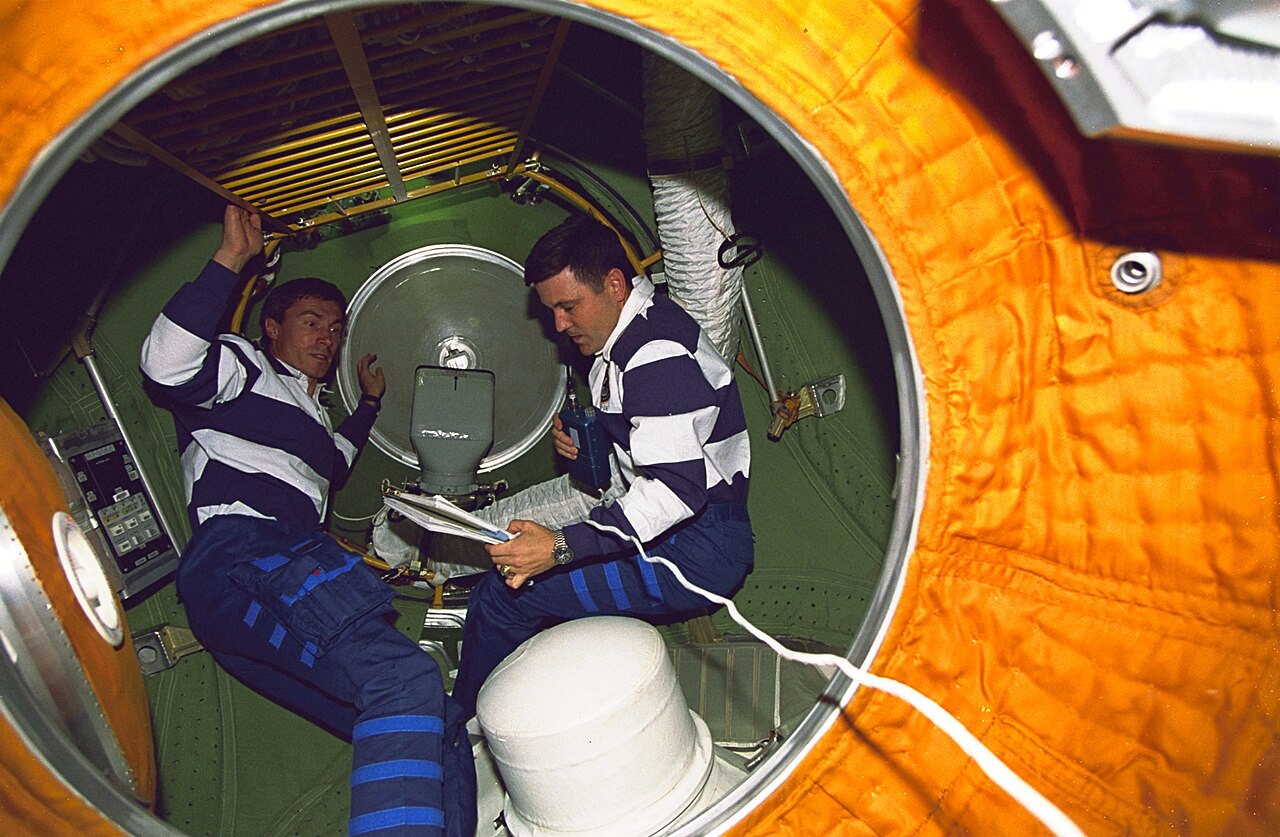
The following day, astronauts Jerry Ross and James Newman conducted the first ISS spacewalk, making electrical connections and running cables between the two modules, according to NASA.
From these two modules, the ISS grew into a permanently inhabited laboratory, with each new component designed to fit the structure already in orbit. The main assembly was completed in 2011, but components were added in later years, so 2011 marks the end of the principal assembly phase, not of all construction.
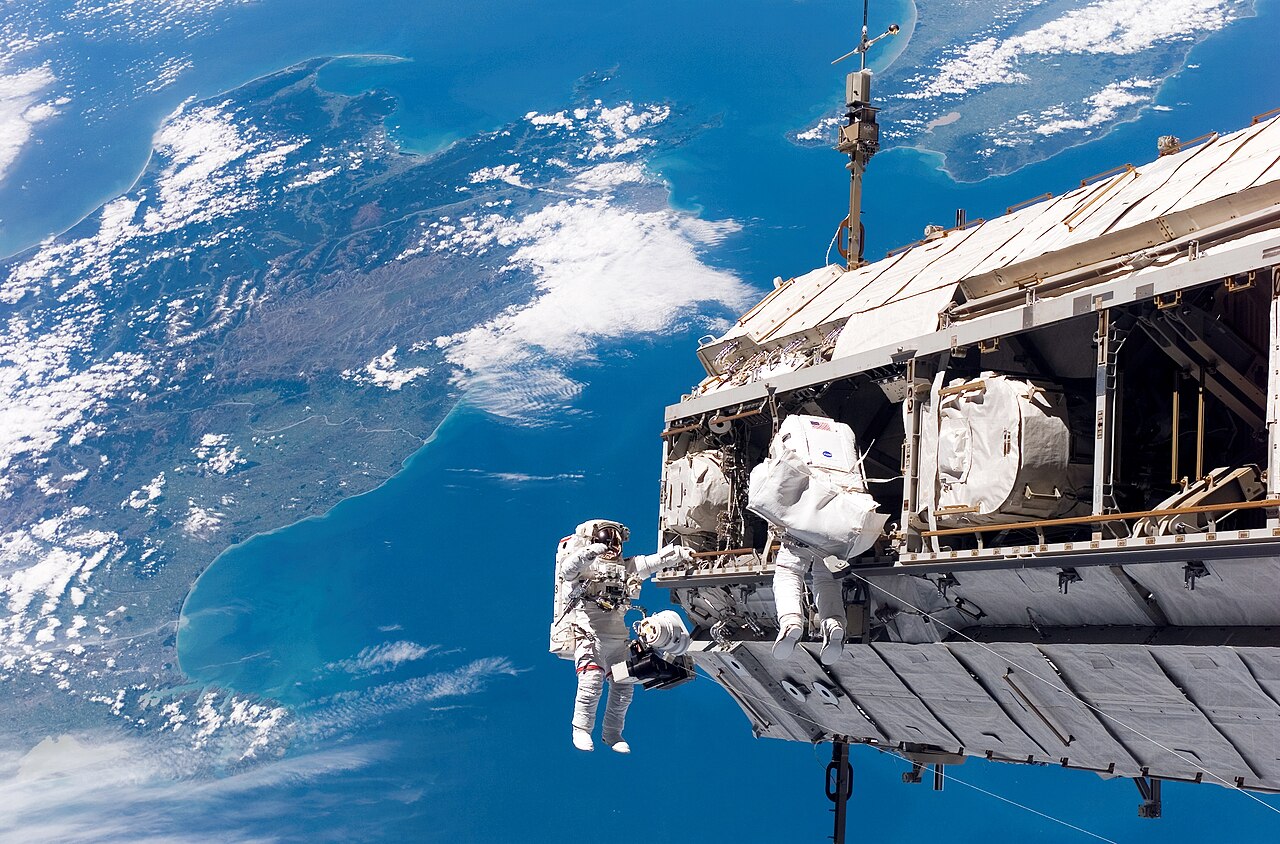
The station's mass also changes as spacecraft deliver supplies and depart.
The ISS has cost an estimated US$150 billion, according to NASA. The figure covers contributions from the international partners and the extensive launch and assembly effort, although estimates vary depending on which development, transportation and operating costs are included.
Assembly in Orbit
Every ISS component had to survive launch, reach the correct orbit, and be installed with no construction site on the ground.

In the early assembly years, the Space Shuttle carried large modules and structural components in its cargo bay, and its robotic arm helped astronauts position equipment. Astronauts also went on spacewalks to connect electrical cables, install external hardware, and prepare new sections for operation.
Beyond the pressurized living and laboratory modules, they installed a large external truss that supports the solar arrays and other equipment. Canada's contribution included Canadarm2, a robotic arm about 17 meters long, installed in 2001.
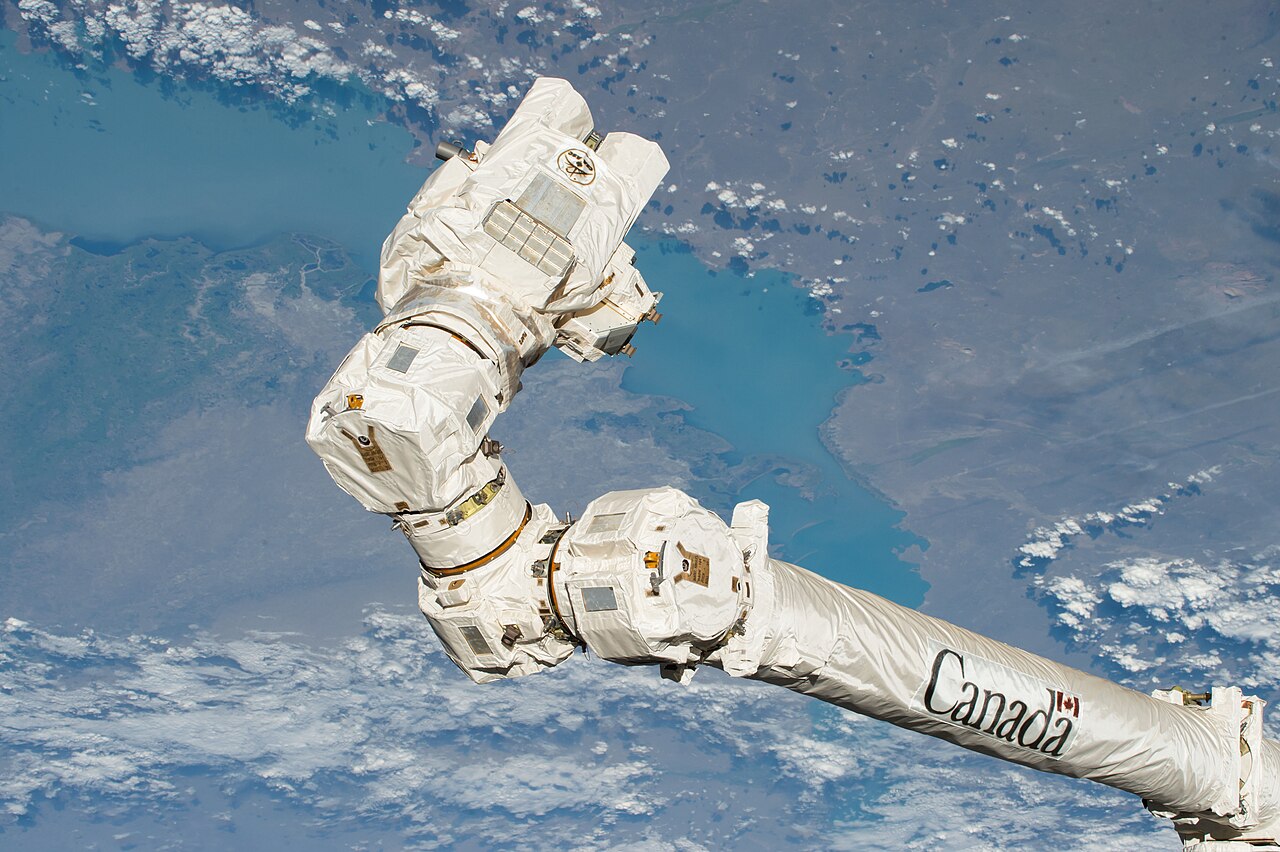
It moves equipment, supports assembly work, and assists astronauts during spacewalks. Each arriving component still had to be captured, positioned, secured, and connected to the station's existing systems, and astronauts sometimes worked outside in spacesuits on tasks the robots could not do alone.
The solar arrays supply electricity for the laboratories, computers, and life support equipment, so each new module had to be linked to the station's electrical, data, and environmental control systems.
According to NASA, assembly took 42 dedicated flights, 37 by the American Space Shuttle and five by Russian Proton and Soyuz rockets. NASA's assembly inventory also lists 43 installed modules and elements, including laboratories, connecting modules, robotic systems, and structural components.
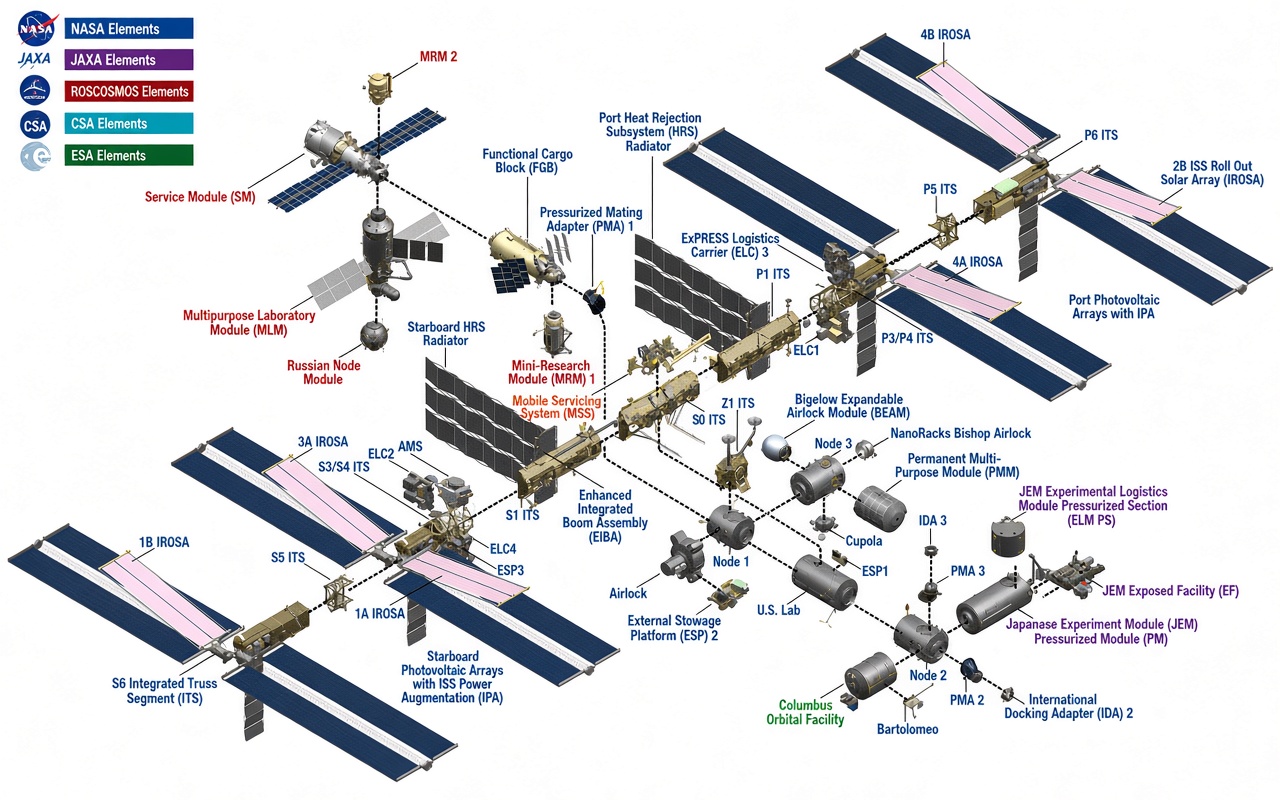
These figures do not include the crew and cargo flights that keep the station running.
A Space Station Built by Multiple Nations
Five space agencies and 15 countries contributed to the ISS.
NASA in the United States, Roscosmos in Russia, ESA in Europe, JAXA in Japan, and the Canadian Space Agency. Between them they provided modules, laboratories, robotics, equipment, transportation, and operational support.
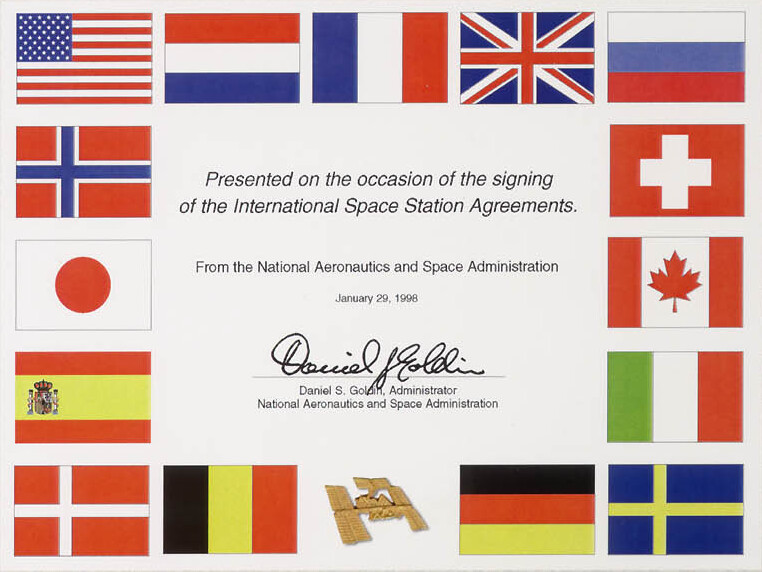
Europe's Columbus laboratory and Japan's Kibo laboratory added research facilities, and Canada supplied the robotics used to handle equipment outside the station.
Because the hardware came from different countries, it had to work together in orbit. That required coordination on engineering, launch schedules, docking systems, and station operations.
The ISS orbits about 400 kilometers above Earth and completes one orbit in roughly 90 minutes. Its 51.6 degree inclination takes it over Southeast Asia, including Indonesia, while Earth’s rotation shifts its ground track from one orbit to the next, according to NASA.
The station can also be seen with the naked eye as a bright point of light moving across the sky. NASA says it is easiest to spot shortly after sunset or before sunrise, when the sky is dark but the ISS is still illuminated by sunlight.
People in Southeast Asia can check viewing times for their location on NASA's Spot the Station website or mobile app.
The ISS is scheduled to retire around 2030, after about 30 years of continuous crewed operation. Space agencies plan to bring it down in a controlled deorbit over a remote part of the ocean.
Read here to learn more: The International Space Station Will Crash Down into the Ocean in 2030