


The journey to Russia began with a gathering on Jakarta’s Jalan Diponegoro. At the Russian House on September 1, Indonesian delegates received their final preparations for an international encounter that promises new friendships, professional connections and opportunities to bring local ideas into a global conversation.
Ninety-four Indonesians have confirmed their participation in the International Festival of Youth, scheduled for September 11–17, 2026, in Yekaterinburg, the capital of Russia’s Sverdlovsk Region. For these delegates, the coming week in the Urals will be an opportunity to learn about Russia while introducing their own country through conversations, projects and everyday interaction.
A Jakarta Send-Off with a Personal Message
The pre-departure meeting brought together delegates and representatives involved in preparing Indonesia’s participation. Welcoming remarks were delivered by Russian Ambassador to Indonesia Sergei Tolchenov, Rossotrudnichestvo’s representative in Indonesia Nikita Shilikov, and National Preparatory Committee head F. Al-Rashid.
“International youth exchanges play a vital role in strengthening mutual understanding and friendship between our countries,” Tolchenov told the gathering.
The ambassador encouraged participants to use the festival to discover Russian culture and traditions while establishing personal and professional relationships. His message placed the delegates themselves at the centre of bilateral cooperation: the people they meet and the conversations they continue could become the foundations of future exchanges.
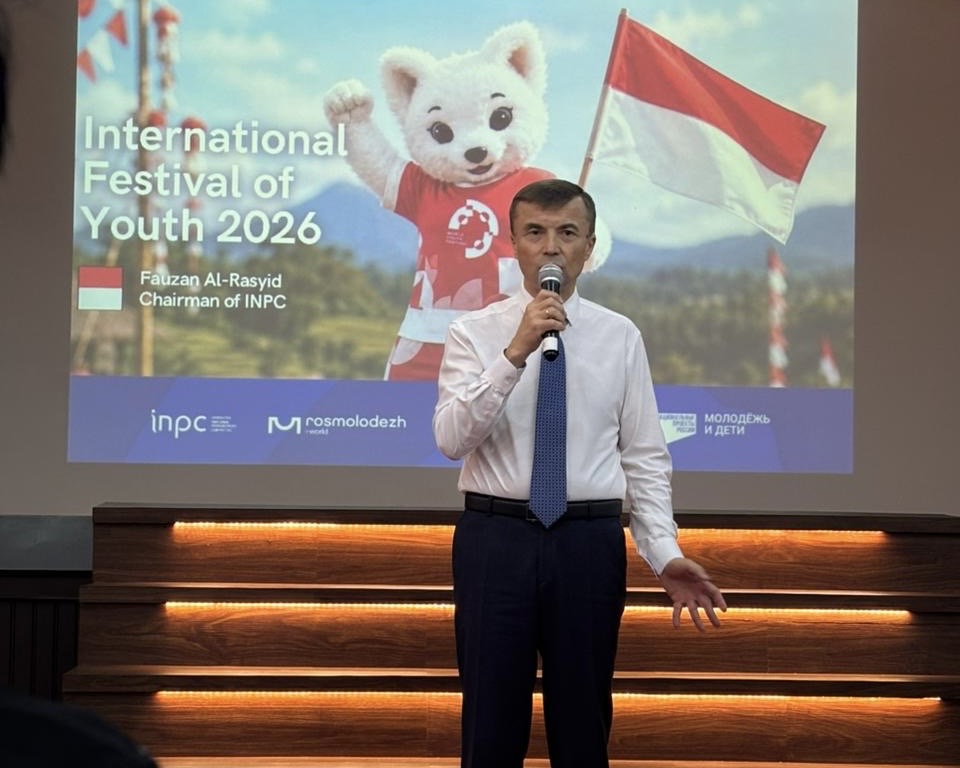
The briefing also addressed the practical side of that ambition. Participants received information about the programme, travel arrangements and preparations for their stay in Yekaterinburg.
Ninety-Four Delegates, Many Starting Points
A presentation displayed during the Jakarta briefing listed more than 800 applications from Indonesia. Of 104 selected participants, 94 had confirmed their participation, while ten were listed as not taking part.
The distinction is important: selection figures describe the recruitment process, while confirmations provide a clearer picture of the delegation preparing to travel.
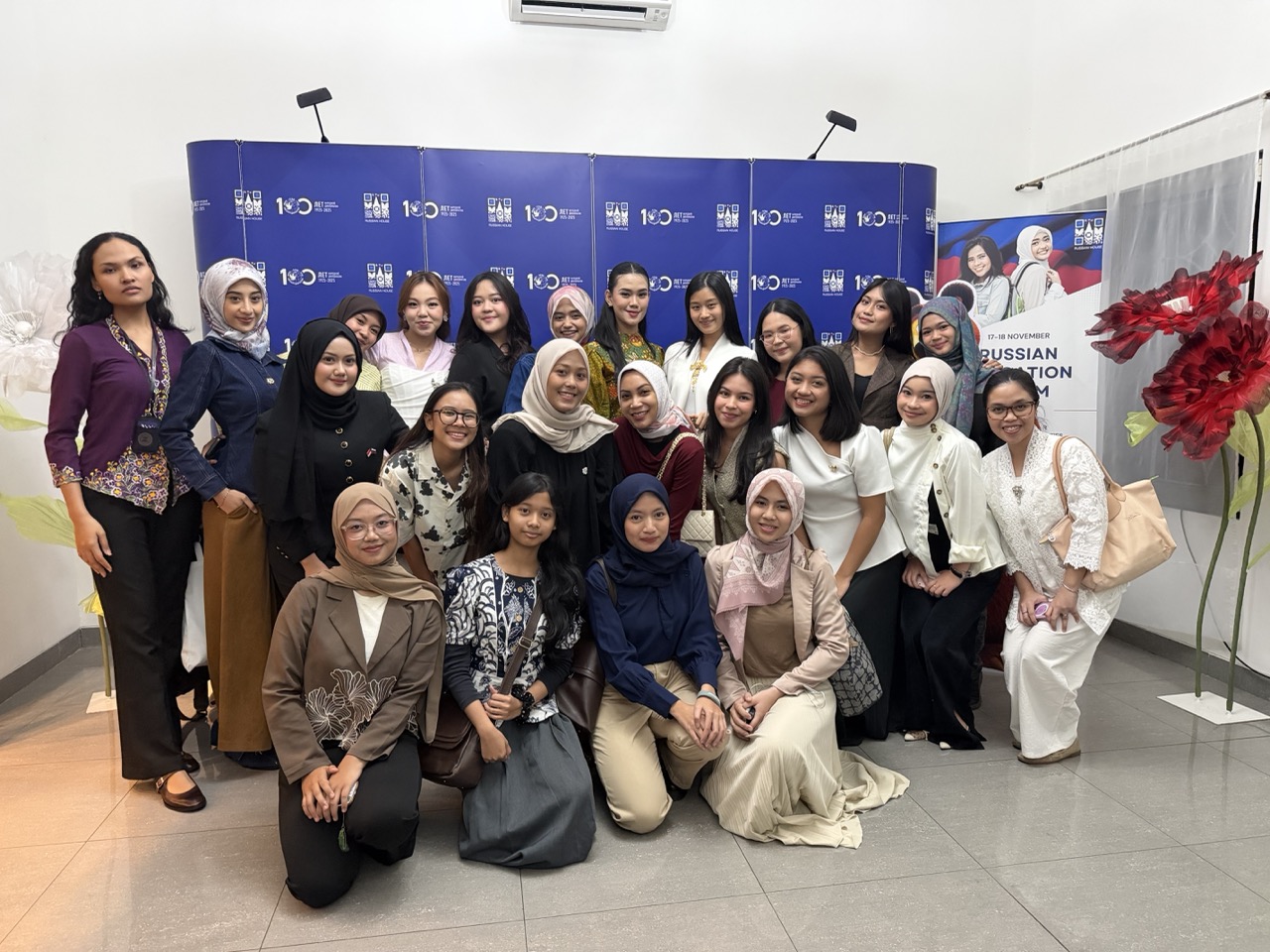
According to detikEdu’s reporting from the meeting, the Indonesian group comprises 12 teenagers aged 14–17 and 82 young people aged 18–35. That range brings secondary-school students into the same international setting as university students and young professionals, allowing different generations of emerging talent to learn alongside one another.
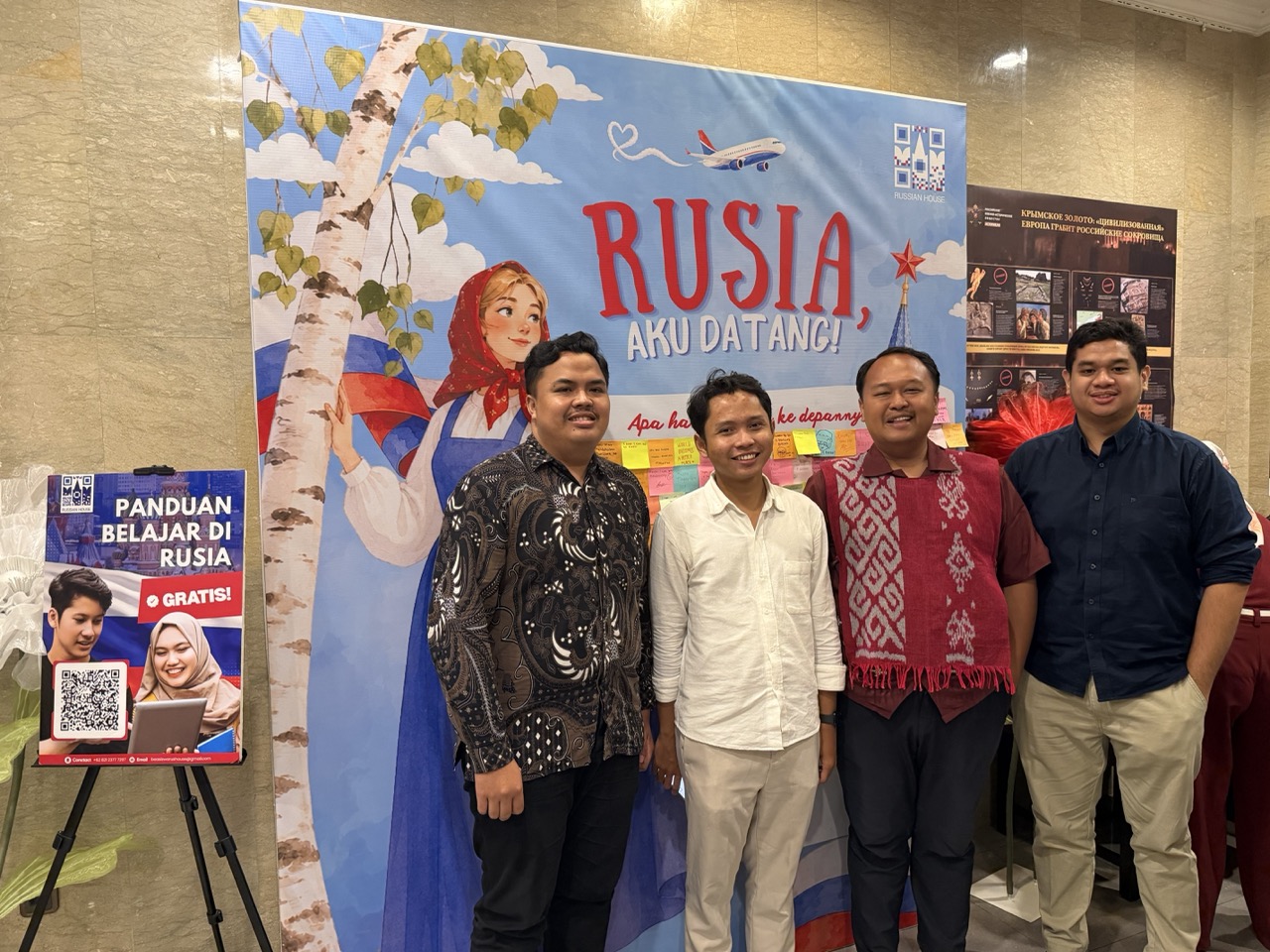
Their responsibilities extend beyond introducing Indonesian food, clothing or tourist destinations. They also have an opportunity to explain the concerns, creativity and ambitions of young people living across a diverse archipelago.
A Global Gathering with a Growing Legacy
Organisers plan to welcome 10,000 participants from 191 countries, including 5,000 Russians and 5,000 international delegates. Under the slogan Follow Your Dream, the programme combines learning sessions, cultural activities, volunteering, wellness, excursions and team-building.
The September gathering is officially the International Festival of Youth 2026, operated by the World Youth Festival Directorate. It continues the network developed through the World Youth Festival held in Sirius, near Sochi, in March 2024, rather than simply repeating that event under an identical title.
According to the Directorate, the 2024 festival brought together 20,000 young leaders from 190 countries. A subsequent World Youth Festival Assembly in Nizhny Novgorod in 2025 gathered 2,000 participants from 120 countries.
The changing formats suggest an effort to sustain international engagement between major gatherings. For Indonesian participants, continuity will depend on whether introductions made during one event lead to collaboration after it ends.
Indonesian Ideas Enter the International Conversation
One particularly relevant example comes from the BRICS+ International Youth Mentoring Program, whose participants are scheduled to present their projects during the festival.
The Directorate reported that 30 participants from 12 countries, including Indonesia, had completed four of the programme’s six stages by late August. Their work spans technology, entrepreneurship and social initiatives, with mentors helping participants develop their projects.
Among them is Indonesia’s Dela Novita Sari, whose platform supports the preservation and study of local languages through courses, video lessons, games and translation. Her project gives international cooperation a distinctly Indonesian purpose: protecting linguistic knowledge while making it accessible to new generations.
It also demonstrates what Indonesia can contribute to the festival. Delegates are not arriving only to receive knowledge. They can bring approaches shaped by their own communities and test them through discussion with people addressing similar challenges elsewhere.
Alongside professional activities, the Russia–the Country of Opportunities platform is preparing an international team-building programme drawing on folk tales and cultural stories. Such activities offer another route into cooperation, requiring participants to listen, negotiate and work together across language differences.
A Young Voice from Depok
For Zhafirra Rabbani Yurianto, a student at SMP Pribadi School Depok and one of Indonesia’s youngest delegates, the festival offers a chance to encounter the diversity of young people from other countries.
“I want to bring back that experience as a foundation to keep growing and make a positive impact on those around me,” she told detikEdu, in remarks translated from Indonesian.
Her expectation brings the scale of the festival back to an individual experience. International participation becomes valuable when a student returns with something she can share: a different perspective, a useful contact, or the confidence to begin an initiative at school.
Delegation head Gavriel Fernaldi also told detikEdu that 22 Indonesian participants would continue into the regional programme after the main gathering. These additional visits are intended to introduce participants to local communities, historical heritage, natural sites and contemporary developments.
Encountering History with Curiosity
The Jakarta briefing included an exhibition supplied by the Victory Museum, titled The Surrender of Japan and the End of World War II. It presented Soviet military operations in the Far East during August 1945 through the museum’s historical perspective.
For Indonesian delegates, the period has an immediate connection: Indonesia proclaimed independence on August 17, 1945, amid the upheaval surrounding Japan’s surrender.
The exhibition therefore offered an opportunity to consider how the same historical turning point is remembered in different societies. Cultural exchange becomes more substantive when visitors approach those perspectives with curiosity, ask questions and distinguish institutional narratives from the wider historical record.
Keeping the Connections Alive
For Willy Jonathan Raba, a participant from Depok, the festival’s value extends beyond the journey to Russia. He is particularly excited to connect with fellow Indonesian delegates and young leaders from around the world. In his view, the gathering reflects Russia’s effort to provide an open space for exchanging ideas, strengthening people-to-people diplomacy and developing genuine international friendships.
“I believe this festival can help us build meaningful global networks for a better future,” he said.
The Directorate’s International Friendship Clubs offer one possible channel for maintaining contact beyond the festival. Developed from the cultural exchange programme associated with the 2024 gathering, the network reports 90 clubs and connections with 140 partner countries.
Its activities cover areas including education, science, media, entrepreneurship, technology, culture and sport. These provide potential starting points for Indonesian alumni interested in continuing joint work, although participation alone does not guarantee funding or a lasting partnership.
The more meaningful measure will come after the delegates return. Campus discussions, school presentations, collaborative research, cultural workshops or continued work on a language-preservation project could extend the experience to people who never travelled to Russia.
For Indonesia’s 94 delegates, Yekaterinburg is an upcoming destination. The larger opportunity lies in what follows: relationships maintained, ideas tested and experiences shared at home. A week abroad can begin a friendship; sustained effort is what turns that friendship into cooperation.


